Introduction
Let's be honest — sending individual emails to hundreds of customers isn't just time-consuming. It's impossible.
Most businesses are still stuck in email marketing's stone age. They're sending generic blast emails, manually timing sends, and guessing what content will resonate. Meanwhile, competitors are using email automation to deliver personalized messages at exactly the right moment.
The question isn't whether you need email marketing automation. The question is: How much revenue are you losing without it?
What is Email Marketing Automation?
Email marketing automation is like having a personal assistant who never sleeps and always knows what your customers want to hear.
It sends targeted, personalized emails based on specific triggers — customer actions, behaviors, or conditions you define. Someone visits your pricing page? Automated sequence begins. They abandon their cart? Recovery email triggers instantly. They haven't engaged in 30 days? Re-engagement campaign starts automatically.
Magic? It happens without you lifting a finger, yet feels completely personal to each recipient.
How It Actually Works
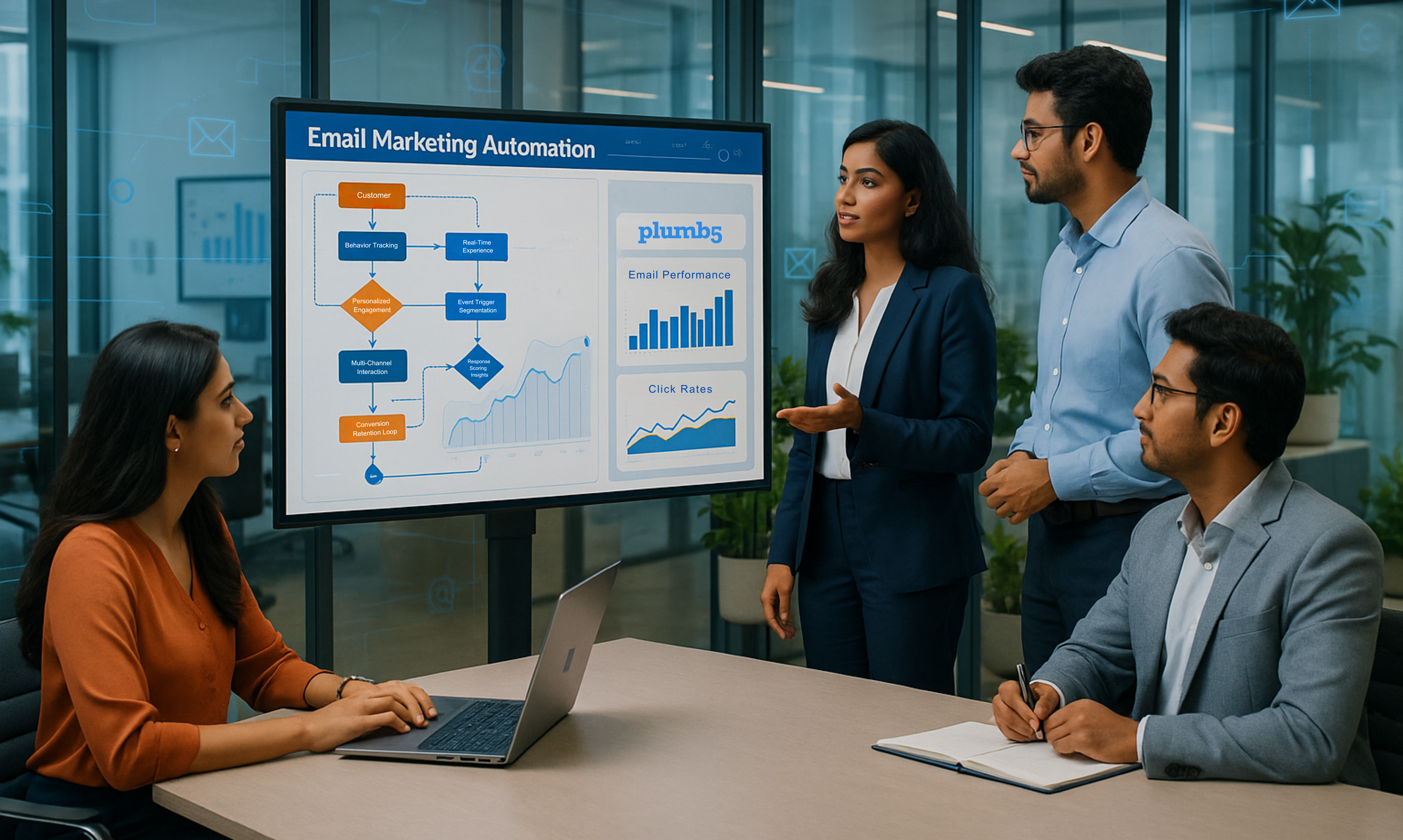
Everything starts with a trigger — something your customer does that sets automation in motion. Common triggers include website visits, purchases, email clicks, birthdays, and profile changes.
Once triggered, the system makes decisions based on your rules. If they clicked but didn't buy, send product benefits email. If they bought Product A, recommend Product B. If they haven't opened emails, try different subject lines.
Modern automation adapts content based on past behavior, browsing history, engagement patterns, and demographics. Emails feel written specifically for each person — because they are.
Why 2025 is Make-or-Break
Today's consumers expect personalized experiences. Generic emails don't just get ignored — they damage your brand. You're competing with Netflix recommendations, Amazon suggestions, and Spotify playlists for attention.
The technology has matured. Tools that once required technical expertise are now user-friendly. What cost enterprise budgets is now accessible to small businesses. Plus, with privacy regulations like GDPR, behavior-based emails are safer than mass blasts.
The Business Impact
Automated emails generate 320% more revenue than regular emails. Welcome series have 4x higher open rates. Cart abandonment emails recover 15-25% of lost sales.
Beyond revenue, you save massive time. Set up once, run continuously. No manual work. Your customers get better experiences with 75% higher click-through rates and reduced unsubscribe rates.
Essential Automations Every Business Needs
Welcome Series
tackles first impressions when someone subscribes. A sequence of 3-5 emails over 7-10 days thanks them, introduces your brand, showcases content, and provides value. New subscribers are most engaged immediately after signing up.
Cart Abandonment
gives second chances. When someone adds items but leaves, send a friendly reminder after one hour, address concerns after 24 hours, and create urgency after 72 hours.
Post-Purchase Follow-up
builds relationships after sales. Confirm purchase, provide helpful tips, request feedback, suggest complementary products, and offer support.
Re-engagement Campaigns
win back inactive subscribers. Acknowledge inactivity, ask about preferences, offer incentives, and provide easy unsubscribe options.
Setting Up Your First Automation
Choose a platform with drag-and-drop builders, segmentation, A/B testing, and analytics. Map your customer journey — how they discover you, what information they need, and what indicates buying readiness.
Start simple with welcome series, cart abandonment, and basic follow-ups. Monitor open rates, click-through rates, conversions, and unsubscribes. Test different subject lines, send times, and content.
Common Mistakes to Avoid
Over-automation sends too many emails too frequently. Generic personalization just inserts names without relevance. Many ignore mobile users, but most emails open on phones. The set-and-forget mentality creates automations that never get optimized. Poor list hygiene sends to inactive addresses.
Start simple with welcome series, cart abandonment, and basic follow-ups. Monitor open rates, click-through rates, conversions, and unsubscribes. Test different subject lines, send times, and content.
The Plumb5 Advantage & Conclusion
The Plumb5 Advantage
- While many platforms offer email automation, Plumb5 integrates email with comprehensive customer journey mapping.
- Real-time behavioral triggers provide instant response to website behavior. Unified customer profiles offer complete interaction views. Omnichannel automation coordinates email with SMS, push notifications, and web personalization for consistent messaging.
- Advanced analytics track performance within complete customer journeys, understand true attribution, and optimize based on revenue impact rather than just open rates.
- The difference? Other platforms automate email sending. Plumb5 automates relationship building across every touchpoint.
Conclusion
- Email marketing automation isn't optional anymore. It's the difference between businesses that grow and those left behind.
- Your customers expect personalized, timely communication. Manual email marketing can't deliver this at scale. Email automation builds genuine relationships while you sleep. Every day without automation is revenue left on the table.
- The businesses winning in 2025 won't have the biggest email lists. They'll have the smartest email automation.
- Start simple, but start now.
Getting Started
Week one: assess current efforts, identify customer journeys, choose a platform. Week two: import lists, create welcome series, set up tracking. Week three: launch one automation, monitor performance. Week four: analyze results, test improvements, plan next automation.